Stanford Graduate School of Education graduates encouraged to lead with courage, care and compassion
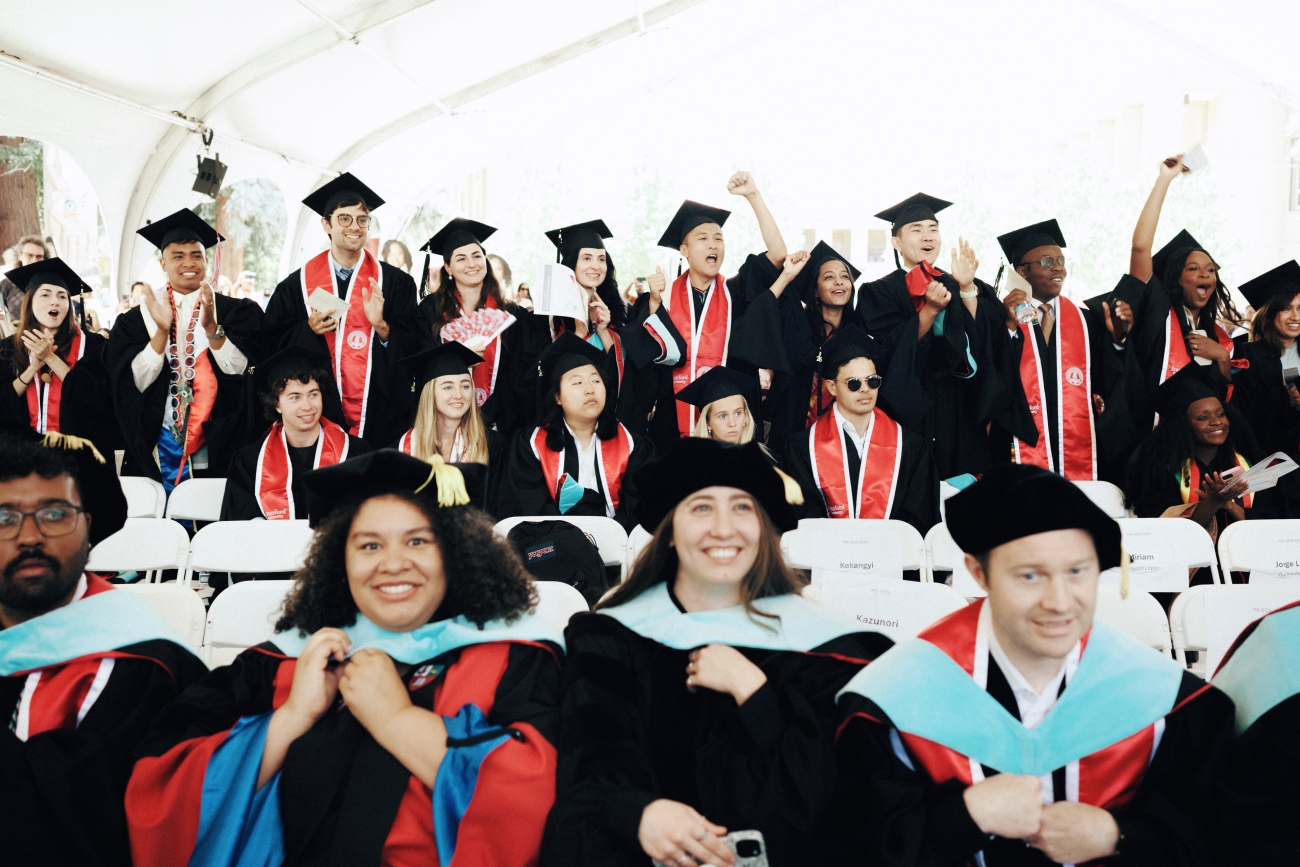
With warm weather, clear blue skies and subtle winds blowing about Canfield Court, the stage was set for Stanford Graduate School of Education’s (GSE) class of 2026 to commemorate the end of one journey and the start of a new one.
Brendan Fereday, who joined his peers at the GSE Diploma Ceremony on June 14 and was a flag bearer, said he moves on with gratitude for the professors and students who came before him.
“I like the idea of being someone that is carrying forward the work that all those who came before me have contributed and done here,” Fereday said. “I really feel like my time here has been other researchers, mentors and advisers making their ceiling my floor, and there’s a sense of closing out this chapter of my life by carrying forward what I’ve been given.
Fereday, who earned a PhD in Developmental and Psychological Sciences, said his post graduation plans include continuing work as a researcher with autonomous driving technology company Waymo, and rounding out projects with Harvard University’s Human Flourishing Program. His biggest takeaway from his time at the GSE, he said, was to center learners in his work.
“I think the goal should always be the individual downstream of our research, because in academia there’s not always the practical application or the tangible impact of the work that we do here,” he said. “At the end of the day we’re thinking about the ways we shape institutions and approach learning that impacts children, young people and everyone.”
The cultivation of the mind
During Sunday’s Diploma Ceremony, the GSE conferred 31 doctoral degrees and 137 master's degrees in programs ranging from teacher preparation and international education to joint degrees with law, business and public administration.
“The cultivation of the mind is the single most important infrastructure, and that's what education does,” said Dean Dan Schwartz, the Nomellini & Olivier Professor of Educational Technology and the Halper Family Faculty Director of the Stanford Accelerator for Learning, in his final commencement address to students as dean before he steps down in September. “An advanced degree is about the tolerance of ambiguity over the long timeline, and the only way you can make it through all this ambiguity is to love what you're doing.”
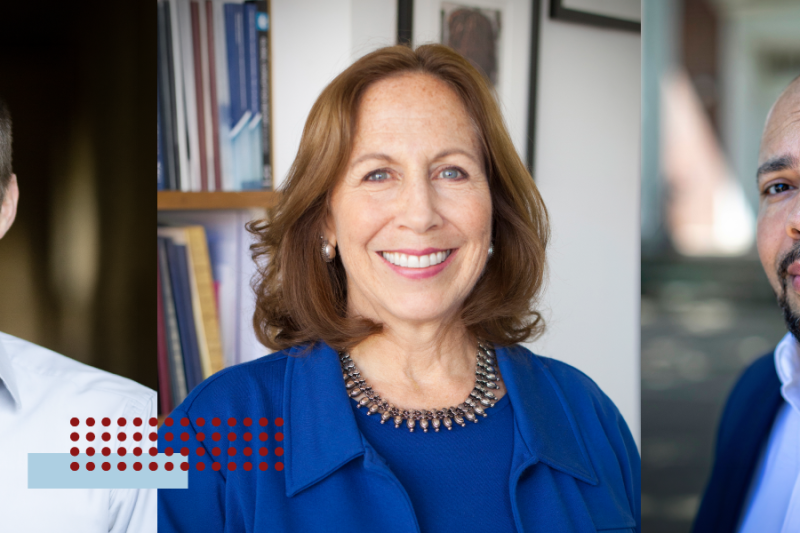
In her keynote address to the graduating class, Rachel Lotan, professor emerita and former director of the Stanford Teacher Education Program, encouraged graduates to “use their voices with courage.”
“As you leave here today, use what you learned, know, and can do with care, love and passion,” Lotan said. “And use your life in service of something larger than yourselves. The world is waiting for you.”
Two days earlier, 18 undergraduate students were recognized at an honor cord ceremony for completing an education minor or honors thesis.
“When we are done here today, you will leave on a journey that will challenge you to solve big and important problems,” said Jennifer Wolf, senior lecturer at the GSE and director of the undergraduate minor. “You will use what you have learned in the Graduate School of Education to choose what is right. And we will wait here, proud and hopeful, ready to read and tell your story.”
Among the undergraduate students honored at the ceremony was Fadie Arabo, who says the minor has informed his approach to the medical field, which he hopes to pursue as his next step.
“I chose the teaching and learning track because I know teaching patients about their health will be something deeply helpful,” said Rabo, who is graduating with a bachelor’s in biology. “Dr. Wolf really made me reshape how I saw the field of education, and how we can truly make an impact on every student we encounter.”


Faculty mentioned in this article: Rachel Lotan , Jennifer Wolf , Dan Schwartz