Educational program based on ‘unity in diversity’ builds bridges across social divides, study finds
With societies around the world growing increasingly fragmented and polarized, a new study finds that a program teaching young people to recognize their shared humanity and develop the capacity to build unity across differences can make them more willing to help, trust, and cooperate with people from other backgrounds.
In a randomized controlled trial involving more than 8,600 young people in India, researchers from Stanford, the University of San Diego, and the University of Konstanz evaluated an intensive curriculum that combined recognition of a shared human identity with the development of attitudes, qualities, and skills needed to foster unity amid diversity.
The curriculum emphasized that unity and diversity reinforce one another, and helped participants learn how to create environments rooted in both.
Through surveys and real-world activities designed to assess changes in participants’ beliefs and behavior, researchers found that those assigned to the program were less likely than their peers who did not participate to show prejudice toward people from other groups, more willing to help people outside their own groups, and more committed to improving their community.
The findings, published July 1 in the journal Nature Human Behaviour, offer evidence that an educational program aimed at expanding young people’s sense of belonging beyond traditional social categories can change attitudes and behaviors in a way that strengthens social cohesion.
“The goal is not to weaken people’s identification with particular communities, but to help them see those identities as part of a broader shared humanity,” said Prashant Loyalka, an associate professor at Stanford Graduate School of Education and one of the study’s authors. “Societies progress when relationships among people from different backgrounds grow stronger. This study shows that education can play an important role in strengthening those ties and, in turn, our capacity as a society to develop and prosper.”
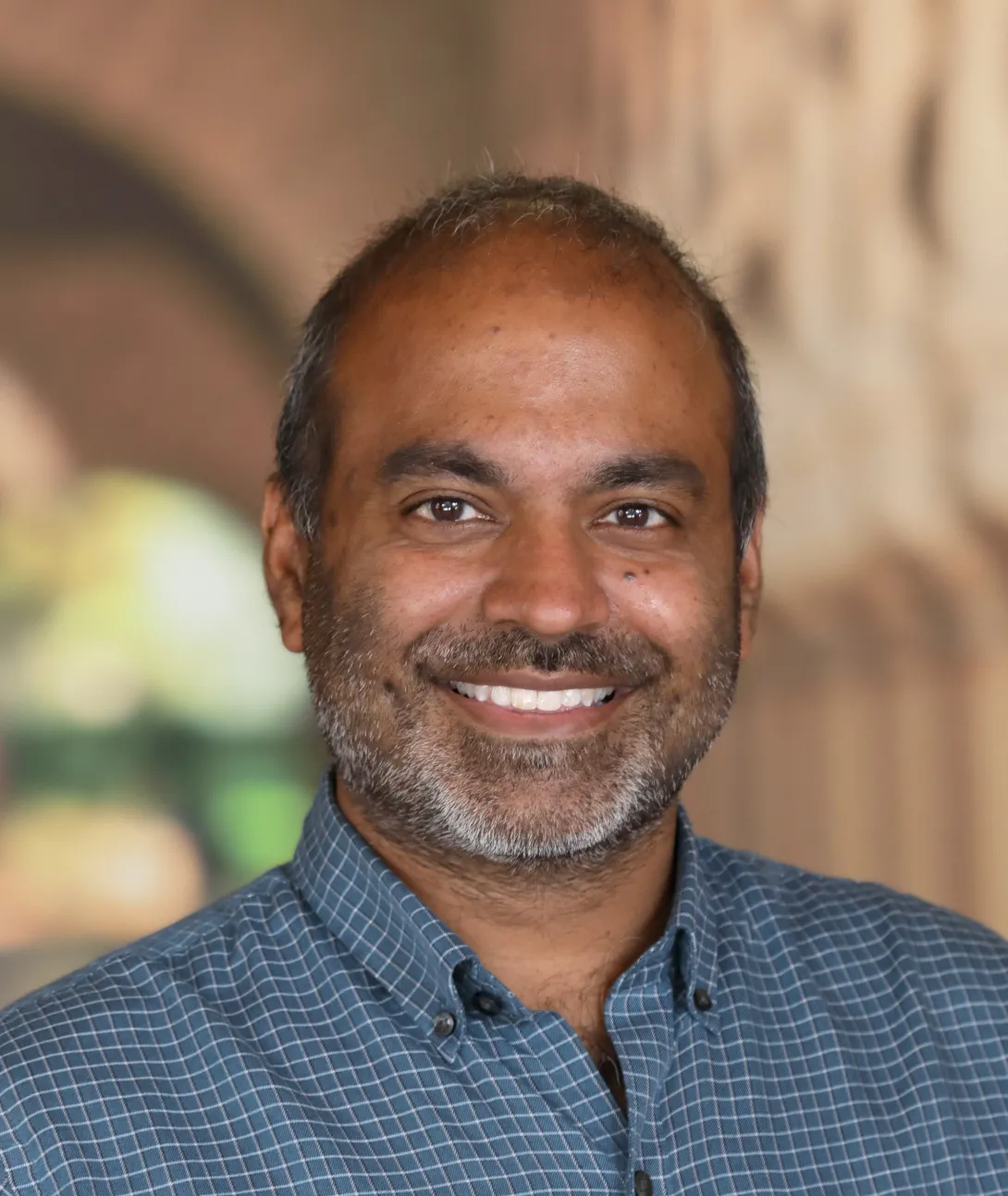
GSE Professor Prashant Loyalka
A different approach to building unity
The researchers created the educational program they studied, titled “Unity in Diversity,” and piloted it through focus groups with students and facilitators for about a year, refining the curriculum based on feedback before launching the large-scale experiment.
The program differs from prevailing educational efforts to build social cohesion, they said, citing “contact-based” interventions — where individuals from different groups are brought together in settings like summer camps or sports — or other social-cognitive strategies, such as imagining themselves in another’s shoes or deliberately confronting and negating stereotypes.
“Those approaches can be limited because they are usually focused on one specific group, or can be costly to scale,” said Loyalka, who is also a senior fellow at the Freeman Spogli Institute for International Studies at Stanford. “We wanted to allow young people to enter into many different types of settings with many different types of people, and apply the knowledge, qualities, and skills it takes to build unity.”
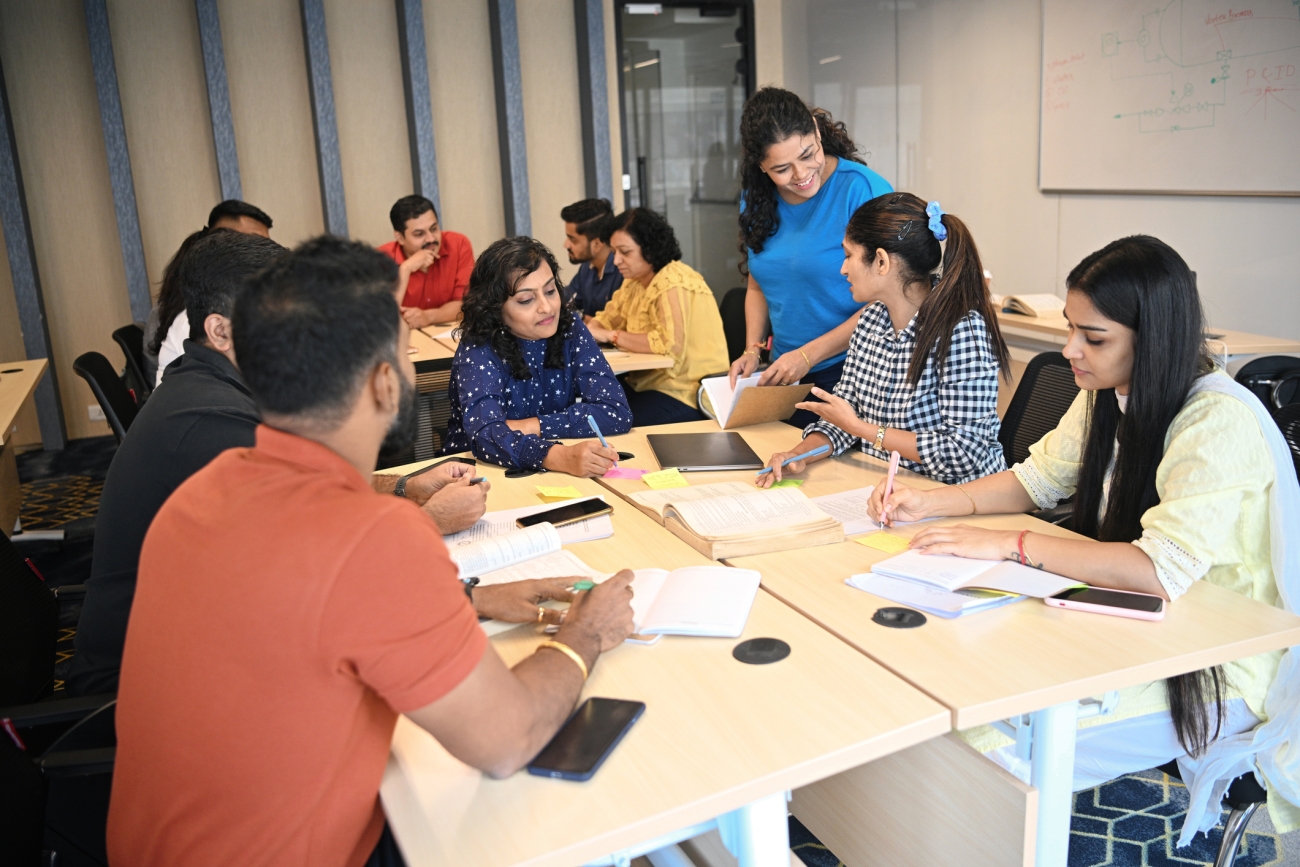
The program’s participatory approach uses short readings with discussion, written reflection, artistic expression — including skits, drawing, music and video — and collaborative service activities.
The curriculum, which required more than 30 hours of instruction over the course of three weeks, was incorporated into a year-long program run by Freedom Employability Academy, a nonprofit organization teaching English, digital literacy, and other employment skills at no cost to disadvantaged young people throughout India.
Most participants ranged in age from 18 to 25, and attended the employability training program for close to two hours a day, six days a week. Teachers attended a two-day intensive, in-person training to prepare to implement the curriculum.
Measuring both attitudes and behavior
The researchers used several approaches to evaluate the program’s impact. Surveys administered before the program and about a month afterward asked about general attitudes as well as concrete social situations, such as having neighbors or close friends from different castes, religions, nationalities, or political affiliations; views on marriage across caste or religion; whether conflict between groups could be resolved; and willingness to contribute to one’s community and society.
The researchers also used experiments with real financial stakes to measure generosity and trust, and presented participants with a workplace conflict to assess how cooperatively they would respond. Other measures captured participants’ choices in more tangible settings, including whether they signed up for a pen pal program with youth in China or selected teammates from different religious backgrounds for a project.
“We thought it was important to include several measures of behavior,” Loyalka said. “Survey responses can be influenced by social desirability — people may say what they think researchers want to hear. By also examining choices involving real incentives and actual opportunities to engage with others, we could assess not only what participants said, but what they were willing to do.”
Compared with those who received the standard curriculum, participants in the intervention expressed less prejudice toward people of different castes and religions, reported greater trust and comfort interacting with people from other groups, and were less likely to support discriminatory social norms, such as opposing marriages across caste or religious lines.
In the behavioral experiments, participants were generally more generous and more cooperative with the financial incentives, including toward people from different religious and caste backgrounds. They were also more likely to sign up for the pen pal program and demonstrated stronger commitments to contributing to their communities.
Notably, the intervention appeared to improve participants’ attitudes and behaviors across multiple dimensions, including caste, religion, nationality, and political affiliation. The study also found no evidence that the program worked better for some participants than others: the effects were similar regardless of participants' caste, religion, gender, or socioeconomic background.
“As social scientists, we can tend to take fractured societies as a given, or see trust, cooperation, and civic commitment as fixed social conditions,” said May Farid, an assistant professor of political science at the Joan B. Kroc School of Peace Studies at the University of San Diego and the study’s lead author. “But our findings suggest that these things can be intentionally cultivated through structured – and scalable – learning experiences.”
A challenging but ideal setting
India offered what the researchers described as an ideal setting for this study. “India has so much diversity, and there are of course instances where social differences may be a source of conflict,” said Loyalka, who has used the curriculum in a summer program with U.S. high school students on a much smaller scale and still seen positive effects.
He said the researchers would have liked to continue tracking the study participants to assess longer-term impacts, but given the context and scale of the study, follow-up became untenable once participants left the employability-skills program.
The authors said the study provides evidence that expanding the boundaries of social identity can reduce conflict between groups.
Humans naturally categorize themselves into groups, they said, and those categories can build solidarity within communities. But they can also contribute to mistrust or discrimination when people see outsiders as fundamentally different.
“If we think of unity as bringing different elements together, it actually requires diversity,” said Loyalka. “In a symphony, people play different instruments. If they play without understanding how to interact and work together, the result is a cacophony. But when they play in harmony, the distinct sound of each instrument and group of instruments enriches the whole.”
In addition to Prashant Loyalka and May Farid, the study’s other authors are Christina Felfe, a professor of economics at the University of Konstanz; and Dinsha Mistree, a lecturer at Stanford Law School and research fellow at the Hoover Institution.
Faculty mentioned in this article: Prashant Loyalka