Secondary Program Information
STEP is a full-time, 12-month program that combines theory and practice throughout. Teacher candidates gain classroom experience during the day. In the afternoon, they attend courses, including a weekly seminar designed to foster community and support their growth as educators.
Coursework and field work are designed to prepare graduates to meet the practical and intellectual challenges of the teaching profession, to serve the needs of diverse students, and to take leadership roles in schools and communities.
Secondary overview
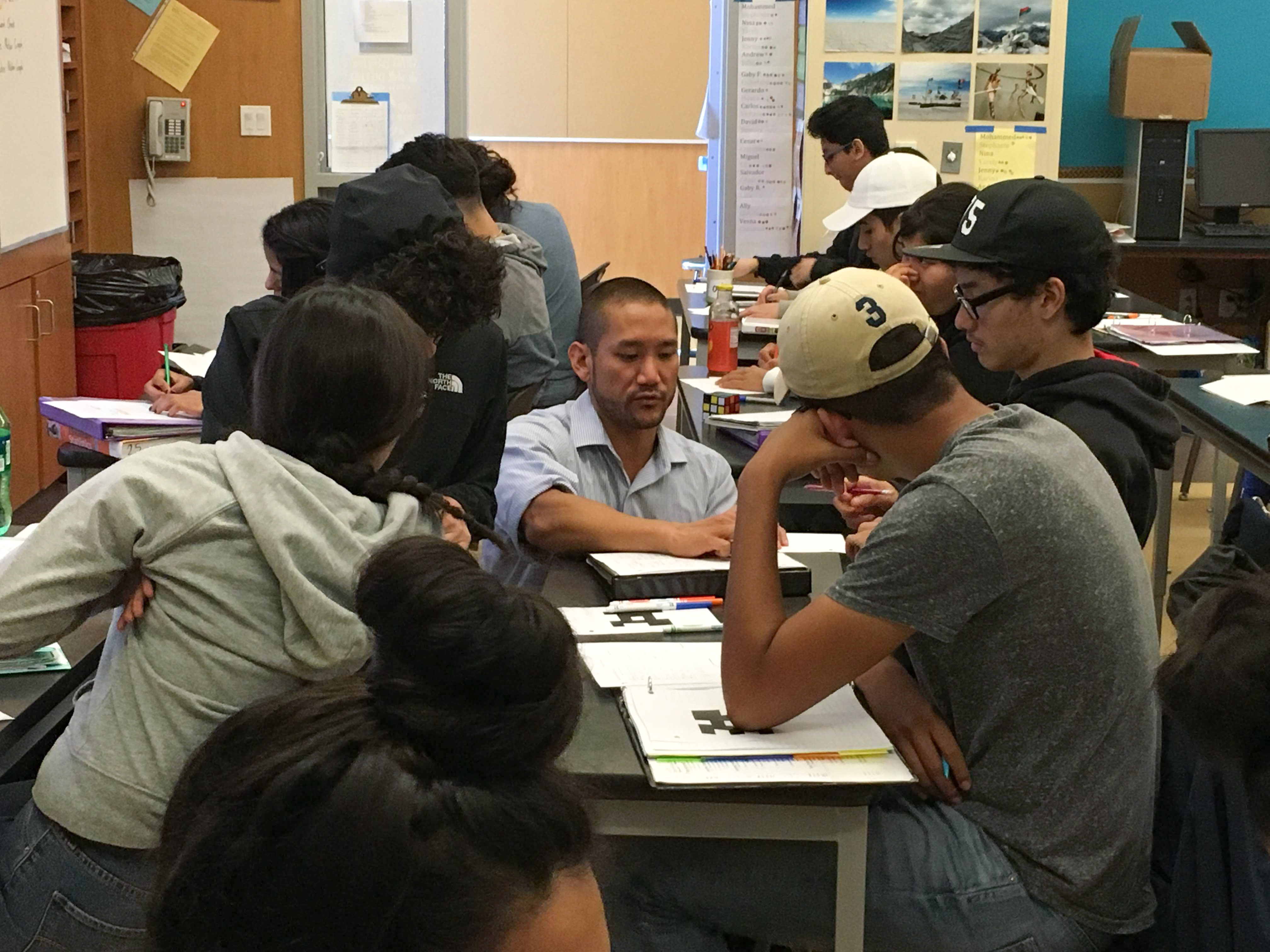
The STEP secondary program offers highly-focused instruction interwoven with hands-on teaching experience, sustained mentoring, and personalized advising. STEP recognizes the integration of many areas of knowledge that underlie effective teaching. The program provides multiple opportunities for observing, planning, and practicing diverse pedagogical approaches in specific clinical contexts.
STEP secondary candidates are admitted into the program in the specific subject area in which they wish to be credentialed: English, History-Social Science, Math, Science, or World Languages.
Secondary curriculum and coursework
STEP secondary teacher candidates take a minimum of 45 units distributed over four quarters and leading to a master’s in education and a preliminary California single subject teaching credential. Distribution of units is determined by course schedule, accreditation requirements, and a specially designed tuition plan.
Secondary candidates attend the curriculum and instruction class sequence for their credential subject area. Candidates have the option to take one to five elective units in education or in their academic subject area.
STEP secondary scope and sequence
| Summer & PreFall | Fall | Winter | Spring |
| Summer Explorations | Year Long Student Teaching Fieldwork | ||
| Secondary Teaching Seminar: Race, Intersectionality, & Identity in Schools | Secondary Teaching Seminar: Leading, Building, & Sustaining Classroom Communities | Secondary Teaching Seminar: Assessment for Learning and Equity | Secondary Teaching Seminar |
| Curriculum & Instruction (C&I): English, History-Social Science, Mathematics, & Science | C&I: English, History-Social Science, Mathematics, & Science | C&I: English, History-Social Science, Mathematics, & Science | C&I Electives: English, History-Social Science, Mathematics, & Science |
| Schoolin’ the Golden State | Language Policies & Practices | The Centrality of Literacies in Teaching & Learning | |
| AI & Education for Future Teachers | Designing Equitable Group Work | Beyond Equity | |
| Adolescent Development & Learning | Jobs Prep & EdTPA Workshop Series | ||
| Summer Literacy Workshop Series | Boundary Crossing at Work: Designing for Learning with Differences in Mind | ||
| Supervisory | Supervisory | ||
To learn more about course content, view the syllabi below.
- EDUC246A: Secondary Teaching Seminar: Race, Intersectionality, and Identity in Schools I 2026 syllabus
- EDUC262A: English C&I I 2026 syllabus
- EDUC263A: Mathematics C&I I 2026 syllabus
- EDUC267A: Science C&I I 2026 syllabus
- EDUC268A: History-Social Science C&I I 2026 syllabus
- EDUC268E: Schooling the Golden State: A History of Education in California (elective) I 2026 syllabus
- EDUC240: Adolescent Development and Learning I 2026 syllabus
- EDUC246B: Secondary Seminar: Leading, Building & Sustaining Classroom Communities | 2025 syllabus
- EDUC246I: AI and Education: Foundations, Opportunities, Challenges, and Considerations | 2026 syllabus
- EDUC262B: English C&I | 2025 syllabus
- EDUC263B: Mathematics C&I | 2025 syllabus
- EDUC267B: Science C&I | 2025 syllabus
- EDUC268B: History-Social Science C&I | 2025 syllabus
- EDUC285A: Boundary Crossing at Work: Designing for Learning with Differences in Mind | 2026 syllabus
- EDUC388A: Language Policies and Practices | 2025 syllabus
- EDUC246C: Secondary Teaching Seminar: Assessment for Learning and Equity | 2026 syllabus
- EDUC262C: English C&I | 2026 syllabus
- EDUC263C: Mathematics C&I | 2026 syllabus
- EDUC267C: Science C&I | 2026 syllabus
- EDUC268C: History-Social Science C&I | 2026 syllabus
- EDUC284: Designing Equitable Groupwork | 2026 syllabus
- EDUC246D: Secondary Teaching Seminar | 2026 syllabus
- EDUC262D: Elective in Curriculum & Instruction in English | 2026 syllabus
- EDUC263D: Elective in Curriculum & Instruction in Mathematics | 2026 syllabus
- EDUC267D: Elective in Curriculum & Instruction in Science | 2026 syllabus
- EDUC268D: Elective in Curriculum & Instruction in History-Social Science | 2026 syllabus
- EDUC289: The Centrality of Literacies in Teaching & Learning | 2026 syllabus
- EDUC299: Beyond Equity I 2026 syllabus
Secondary clinical work
The purpose of student teaching concurrent with coursework is to allow teacher candidates to construct bridges between theory and practice. Candidates spend time observing and practicing different approaches to teaching and learning and develop relationships with students, school faculty, and families.
Cooperating teachers and placement school sites are chosen based on guiding principles of equitable practices and high quality teaching and mentorship. Placements align with the STEP curriculum and support the candidates’ growth and development as novice teachers.
Examples of secondary placements
This map shows examples of schools that have served as placement school sites for STEP secondary teacher candidates. Filter down using the map's sidebar.
Secondary handbook
For more detail on academic and clinical work, please view the current year STEP secondary handbook.
Student Voices
Hear from our students about why they chose to do their teacher education at Stanford, what their learning journey has been like, and what advice they would give to future STEP students.