National study of school cell phone bans shows benefits are not immediate
Having students place cell phones in locked pouches may not be an instant panacea for problems in U.S. classrooms, but there could be gains if schools persist, according to a report published by the National Bureau of Economic Research.
The large-scale report compared schools that did, and did not, take up these strict phone policies over a three-year period across more than 43,000 middle and high schools nationwide. Researchers found that the policies did reduce usage during the school day but had no major impact on many measures: not on student test scores, attendance, or attention in class—not even on perceived cyberbullying. At least at first, the bans caused disciplinary incidents to rise and student well-being to fall.

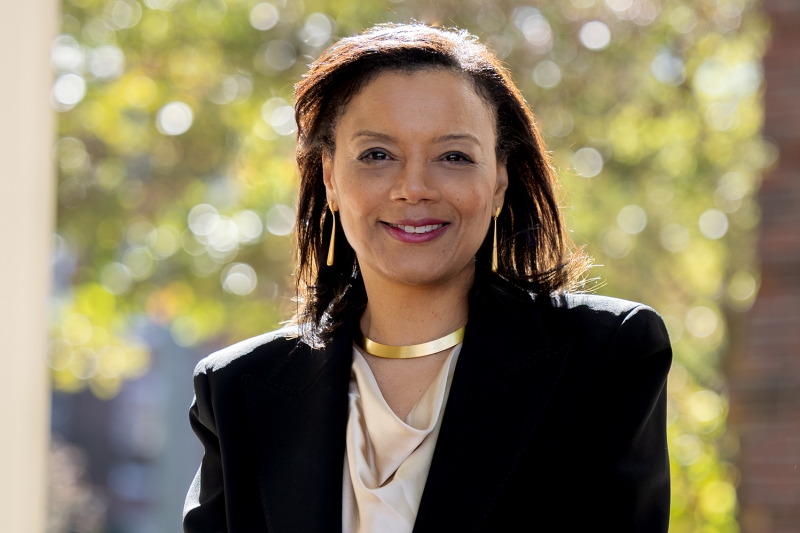
Professor Thomas Dee (Photo: Stanford Graduate School of Education)
The positives started to emerge as time went on. The disciplinary issues dissipated after the first year, and in the third year, student well-being was higher than before the phones were stashed away.
“There is clearly justifiable enthusiasm for school phone bans, but it’s important to recognize that building effective, phone-free learning environments does not appear to be a simple or quick fix,” said Thomas Dee, the Barnett Family Professor in Stanford’s Graduate School of Education (GSE) and one of the authors of the report. “The very early experience schools have with phone bans is sobering, but there are also indicators that as schools adjust to phone-free policies, the benefits of these bans may be realized.”
The popularity of phone bans has surged with about two-thirds of U.S. states passing legislation limiting their use in schools, yet research on these restrictions has been limited in the U.S. to smaller studies conducted at the local level.
To address this problem, an interdisciplinary research team from Stanford, Duke University, University of Michigan, and University of Pennsylvania collected a broad array of data on schools across the country. This included test scores, school attendance records, and discipline reports as well as surveys from parents, students, and teachers. The researchers specifically looked at schools that adopted restrictive “pouch” policies, which require students to seal their phones in pouches that lock magnetically for the entire day. They also verified that cell phone activity actually decreased at those schools by collecting GPS ping data and surveying teachers.
The study was set up as a quasi-experiment with a “difference-in-differences” design, which means the researchers not only compared schools that took up pouch policies to a comparison group that did not, but also looked at the changes in the schools over time—from before the policies to after they were enacted. This study was also pre-registered: The researchers publicly documented their hypotheses, outcome measures, and research design before starting the analysis, an open-science practice that helps ensure the study does not lead to false findings.

Professor Matthew Gentzkow (Photo: LiPo Ching)
In the three years after the start of a pouch policy, the study found almost zero difference in test scores on average, but digging deeper into the data, researchers found a slight bump in mathematics scores in high school. By contrast, middle schools saw a slight decrease in overall test scores following phone bans. These results may reflect the age difference, the authors said, with the more impulsive younger students substituting other disruptive behaviors for the distraction of cell phone screens. Regardless, neither change in test scores was very large.
“Now that we’ve been able to really look at national evidence with a lot of detail, we can say both that there’s solid evidence of real benefits of these policies and that putting phones in pouches alone is not causing dramatic changes in test scores,” said report co-author Matthew Gentzkow, professor of economics at Stanford’s School of Humanities and Sciences (H&S).
More needs to be done to understand what is happening in schools with phone policies, Gentzkow added. For instance, there may be learning effects that are not being picked up by test scores alone. Also, the positive change in well-being could be due to an overall change in student social dynamics. Because the pouch policies mean no phones for the entire school day, students may be directly interacting more, such as playing games during lunch and free periods and talking in between classes.
“This study is really a first step: It answers a number of important questions but also raises new ones,” Gentzkow said.
Dee is also the Robert and Marion Oster Fellow at the Hoover Institution and a senior fellow at the Stanford Institute for Economic Policy Research (SIEPR). Gentzkow is also the Landau Professor of Technology and the Economy in H&S, a senior fellow at SIEPR, and the faculty director of Stanford Impact Labs.
Hunt Allcott, professor of environmental social sciences in the Stanford Doerr School of Sustainability and a senior fellow at SIEPR and at the Precourt Institute for Energy, is also a co-author on the study.
This research received support from Arnold Ventures, the Bezos Family Foundation, the National Governors Association, Stanford Impact Labs, the Stuart Foundation, and the Walton Family Foundation.
Faculty mentioned in this article: Thomas S. Dee