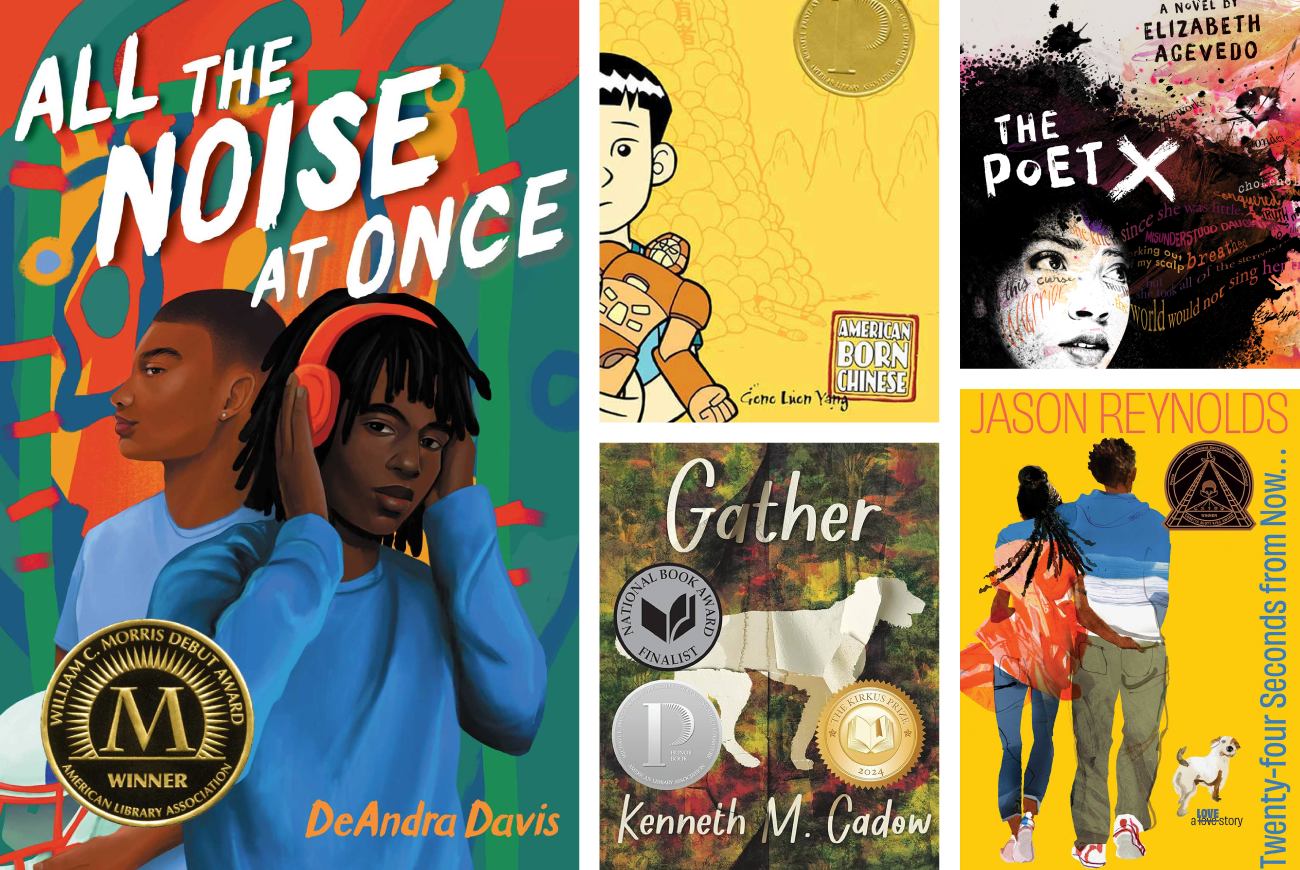
Five summer reads that speak to how teens live now
For many teenagers, summer means a break from required reading and a chance to get lost in a book on their own terms. But fewer teens are reading for pleasure than ever before: A recent survey shows that the percentage of 13-year-olds who say they read for fun at least once a week has fallen sharply over the past decade to the lowest level in the survey’s 40-year history.
How can adults help the teens in their lives develop a love for reading — and why does it matter?
“Pleasure reading is good for everybody, no matter what age they are, but it’s especially good for young people,” said Jennifer Wolf, a senior lecturer at Stanford Graduate School of Education and director of undergraduate programs at the GSE (UP@GSE).
Teens practice important life skills when they read stories, said Wolf, who teaches a course at the GSE on young adult (YA) literature and its role in adolescent development.
“Judging character and trustworthiness, assessing risk, decoding symbols and messages — young people do a lot of that work through reading,” she said. “And people who read stories grow their capacity for empathy, because stories ask us to consider life from the perspectives of other characters, from other worlds.”
Giving young people agency over what they read is key to developing a lasting habit, she adds. “Adults can help guide teens towards titles they may like,” she said, pointing to resources like the American Library Association for a variety of award-winning recommendations. “But I think it’s important for teens to be able to select whatever story or genre or format that speaks to them. Part of the job of a teenager is to learn what we like and what we don't like, without having to ask permission.”
For starters and inspiration, we asked Wolf to share some of her favorite YA novels. Here are five titles at the top of her list.
All the Noise at Once, by DeAndra Davis
The protagonist of this book is a Black high school student named Aidan, who has autism and aspires to play on the school football team. “All of these different aspects of his identity both challenge and support him,” said Wolf, who added that the novel also explores teen police interactions as Aidan’s older brother is wrongly charged for assaulting an officer.
She also praised the book’s portrayal of adults, which she says marks something of a departure from YA novels in the past. “Aidan’s parents are real, caring, complicated people who are active in the novel’s story and narration.”
The Poet X, by Elizabeth Acevedo
One of the “most beloved” of the YA novels Wolf’s students read this year, this National Book Award winner is written entirely in verse, centered around an Afro-Latina teen in Harlem who discovers her voice through slam poetry. The book explores many issues facing young people, including family expectations and conflict, personal identity, and self-expression.
“It also brings in the topic of religion, which for a long time was kept out of YA,” said Wolf. “As the genre grows, it seems to be bringing in more topics that it used to leave out.”
Gather, by Kenneth Cadow
Set in rural Vermont, this novel follows a teenager trying to support his family while his mother struggles with opioid addiction. “One of the things that's unique about this novel is that it’s based in a rural location,” said Wolf. “Life is hard for him. He finds a way to grow and use the resources around him.”
The novel also features a fully developed adult character in the boy’s teacher. “She isn’t a perfect saint, or one of these cartoon goofballs that we’ve seen just dropped in and out of novels for so long,” Wolf said. “We see the protagonist learn how to use school and take advantage of what his teacher has to offer.”
American Born Chinese, by Gene Luen Yang
This graphic novel introduces three seemingly unrelated characters before revealing how they connect in a surprising twist.
“The most common reaction my students have when reading it is that they get to the last page and they're like, ‘Wait — what?’ And they go right back to the beginning and read it again,” she said. “The ending is so awesome in the most literal sense, so unexpected, and so complicated that they want to re-read it to see: Does this hold up? How did we get here?”
Twenty-Four Seconds from Now . . ., by Jason Reynolds
This coming-of-age novel, told from the point of view of a high school senior, captures the anxiety of the anticipation of a first sexual experience, touching on issues of identity, consent, and young masculinity.
Innovatively structured in reverse chronological order, the story is written in a stream-of-consciousness style by best-selling YA author Jason Reynolds. “Reynolds is a really important figure in young adult literature today, and this book was a favorite of my students this year,” said Wolf.
The novel, she said, is a modern-day answer to Judy Blume's Forever, the classic 1975 YA novel about first love and sexual awakening. “It's like he looked back at that and said, How can we be in conversation with that? How can we bring it into this day and age and open up the perspectives it offers?”
Faculty mentioned in this article: Jennifer Wolf