Denis C. Phillips, Stanford philosopher who questioned assumptions in education research, dies at 88
Denis C. Phillips, a professor emeritus at Stanford Graduate School of Education (GSE) whose work helped generations of scholars think more carefully about how educational research is conducted and interpreted, died May 23 following a long illness with Parkinson’s disease. He was 88.
For more than three decades on the GSE faculty, Phillips was an influential voice in the philosophy of education, exploring questions around how evidence is generated, how theories are tested, and how researchers can remain objective in their pursuit of knowledge.
Colleagues recalled him as a firm and incisive critic, impassioned but kind, who worked comfortably with social scientists in various disciplines, helping them clarify assumptions that often went unexamined.
“He was a first-rate philosopher of science with a full understanding of what teaching and education was about, at a time when most philosophers of science didn’t deal with education,” said Richard Shavelson, a former dean of the GSE. “In the culture wars over how one should do scientific research in education, he was an important force in the conversation on whether you can do scientific research in education, and what that would look like.”
From high school teacher to philosophy scholar
Born in Melbourne in 1938, Phillips grew up immersed in ideas, politics and performance. His father worked as a scriptwriter for a vaudeville theater in Australia before going into civil service as a state electoral officer, and his mother came from a family deeply involved in the theater.
Phillips followed suit, taking up acting in plays as a student. Before graduating from high school, he received a government fellowship that would cover his university expenses in exchange for committing to serving the state as a teacher for three years after college.
That brought him to work as a high school biology teacher, where his training sparked a fascination with Charles Darwin’s theory of evolution. In a 2019 interview for the Stanford Historical Society’s Oral History Program, he said that evolution struck him as a “great unifying idea” that transformed disconnected facts into a clear explanation of the biological world.
That recognition drew him toward philosophy; and around the same time, he discovered the work of the American philosopher and educator John Dewey, who was deeply influenced by evolutionary theory.
Phillips worked as a science teacher for several years until deciding to pursue a doctorate at the University of Melbourne in the philosophy of science and the philosophy of education. His advisor, Barbara Falk, was a powerful influence, challenging his thinking with often harsh criticism. He recalled her returning drafts covered in red ink and comments like “This is crap” and “What the hell are you doing, Denis?” He came to credit her with teaching him rigor, and said she shaped his own approach to mentoring.
“Barbara had told me once that there was no point in pussyfooting around,” he said. “She thought I was strong enough to take it.”
Phillips then taught at Monash University in Melbourne until the early 1970s, when he received a letter from Lee Cronbach, a renowned educational psychologist and a professor at Stanford, inviting him to apply for an open position on the GSE faculty. He knew Cronbach only by reputation and was amazed by the invitation, which he pursued, joining the faculty in 1974.
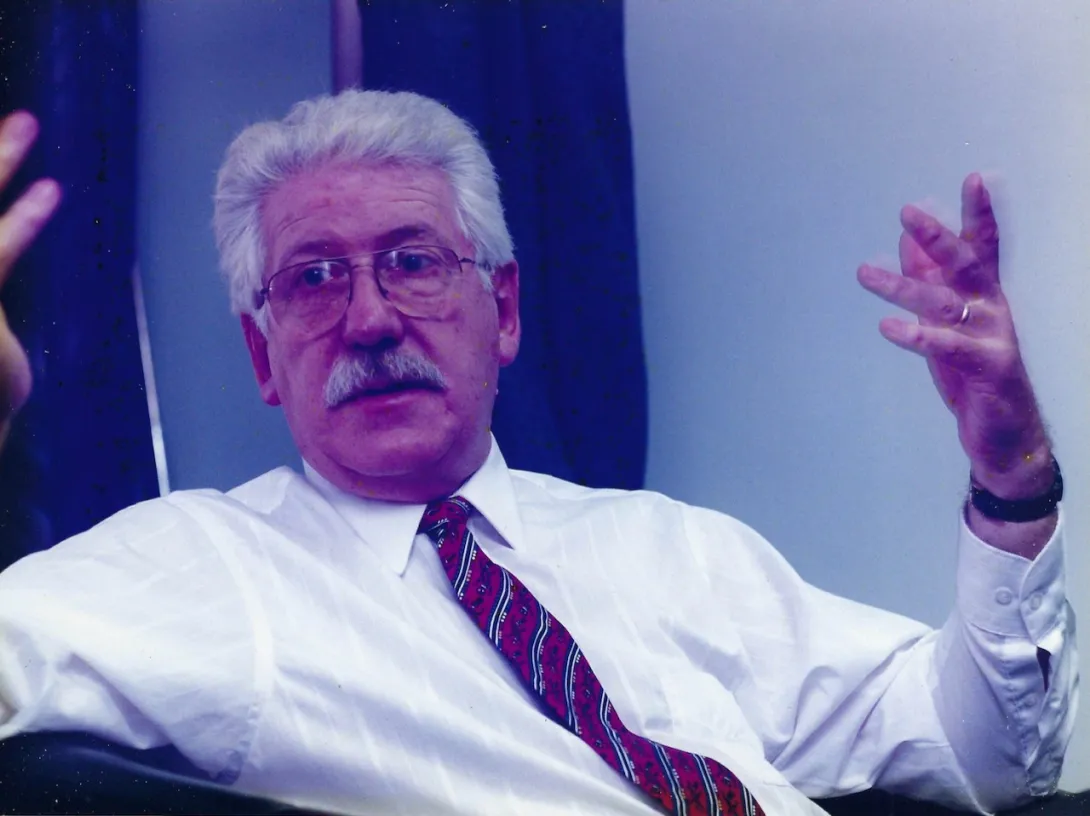
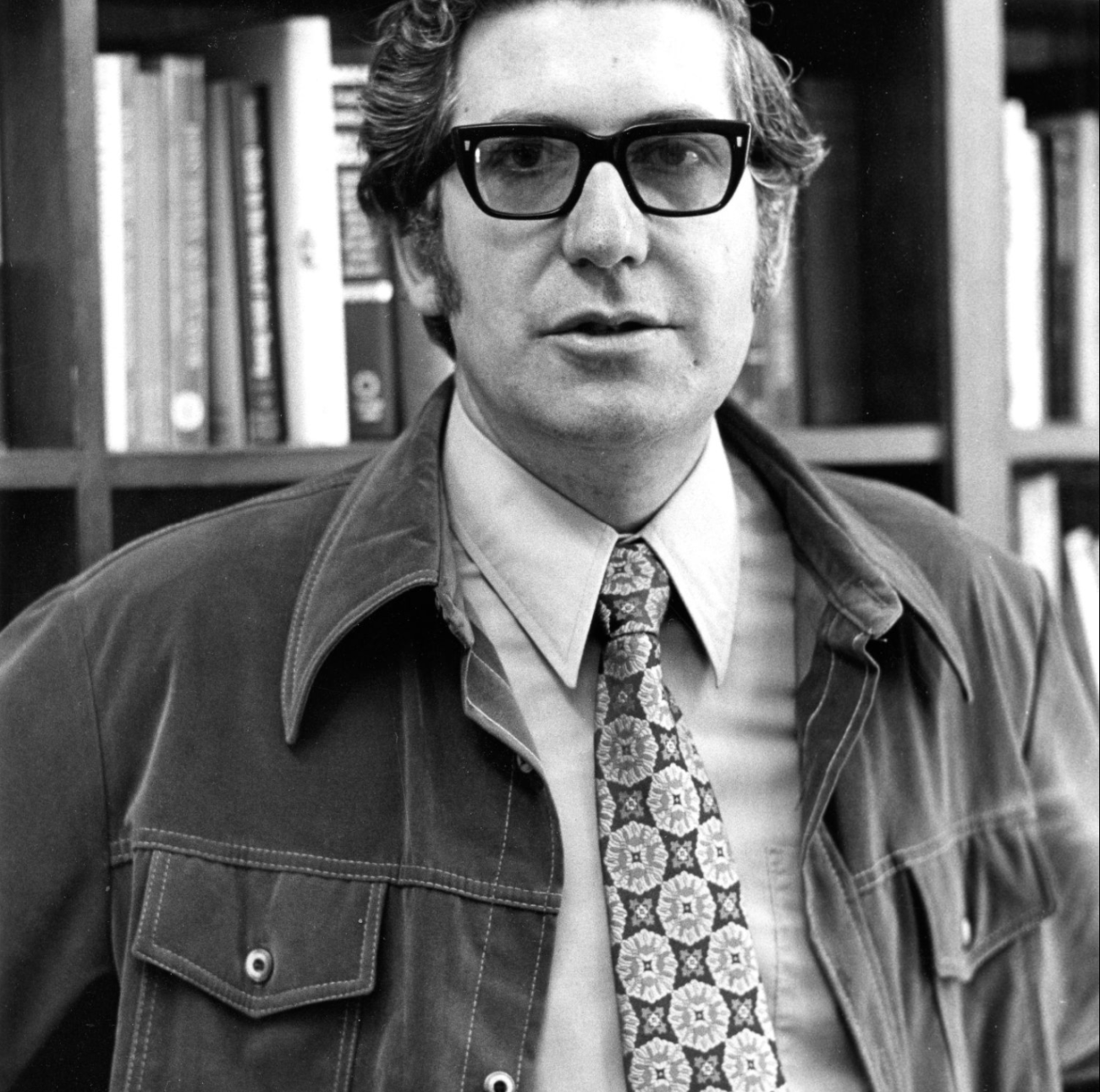
Phillips was on the GSE faculty for more than 30 years, also serving as associate dean and interim dean. (Photo courtesy of the Phillips family)
‘The archetype of the tough-minded analytical philosopher’
At Stanford, Phillips rose quickly through the ranks: He earned tenure after three years and became a full professor soon after. He was on the GSE faculty for more than 30 years, also serving as associate dean and interim dean before he eventually retired in 2007. He held a courtesy appointment in philosophy at the Stanford School of Humanities and Sciences, becoming known for courses that attracted students from across the university.
He also spent seven years as a resident fellow on campus in Twain House. He and John Perry, a resident fellow from an adjacent dorm who chaired the philosophy department at Stanford at the time, co-created a popular course called “Philosophy Goes to the Flicks,” where students watched films and then debated their philosophical implications.
He wrote and edited numerous books on educational research, philosophy, and methodology, including The Social Scientist’s Bestiary, a collection of essays addressing theoretical and philosophical issues in the social sciences, and a companion volume to Dewey’s Democracy and Education, published 100 years after the original text.
He was best known as a champion for rigorous inquiry in education, helping scholars understand how knowledge is created, tested, and improved. His intellectual heroes included Karl Popper and Imre Lakatos, philosophers who also emphasized criticism and refutation over certainty. He focused on the underlying questions of research: What counts as evidence? How do values shape research? Can scholars ever be truly objective?
Phillips was “the archetype of the tough-minded analytical philosopher,” said Nicholas Burbules, PhD ’83, a former student and coauthor with Phillips of the 2000 book Postpositivism and Educational Research. “That [role] is a busy occupation in a field like education, where there is a lot of well-intended and tender-hearted rhetoric that doesn’t always bear up to skeptical scrutiny.”
When Shavelson became dean of the GSE in 1995, he appointed Phillips associate dean soon after. He recalled being a target of Phillips’ rigor and criticism even before the two had met.
“He attacked some of my research in an article. I sent the article to a philosopher friend of mine, and he said, ‘You’ve been DCP’d,’ ” Shavelson recalled, referring to Phillips’ initials. “You haven’t made it as a scholar until you’ve been DCP’d.”
Provocative but fun
With his theatrical background, Phillips had a “flair for the dramatic,” said Eric Bredo, PhD ’75, a former student and professor emeritus at the University of Toronto. He was “in great demand to lead public debates at large conferences, which he did with humor and intellectual insight.”
As exacting as Phillips was in his work, he didn’t take himself too seriously, colleagues said. “Denis hated to drive,” Burbules recalled, “and his license plate when I knew him read DRONGO, which is an Aussie word for ‘doofus’ or ‘idiot.’ ”
Phillips’ humor was a trait many recalled fondly. “He was always provocative, but always fun,” said Shavelson, who co-taught a course with Phillips at the GSE for several years and remembered him regularly performing magic tricks from the front of the room to capture the students’ interest.
Phillips also participated regularly at the “Triennial Travesties,” a satirical showcase hosted by the American Educational Research Association (AERA) at its annual conferences since 1969, poking fun at education research and fellow academics.
Deborah Stipek, professor emeritus and former dean of the GSE, remembered him as “a brilliant scholar and an extraordinary human being, but he was a human being first,” she said. “He was formidable in the sense of his stature, his reputation, his contributions to the field. But he was also caring, kind, and affable, like your favorite uncle.”
Phillips is survived by his wife, Valerie Phillips; his children, Russell, Darryl, and Allison; his stepchildren, Jonathan, Hillel, and Daniel; and nine grandchildren.