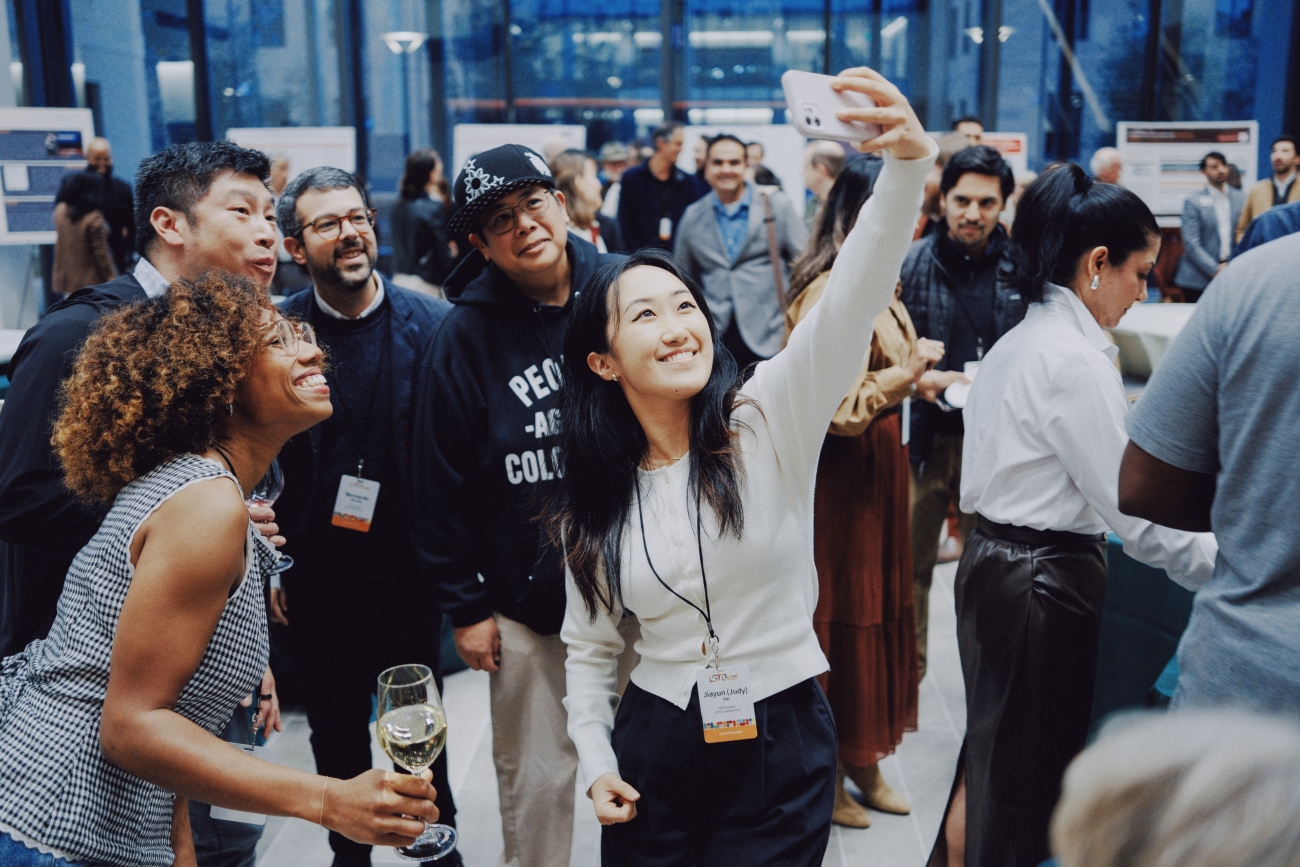
Stanford Graduate School of Education degree program celebrates 25 years of designing and researching effective ways to enhance learning
From virtual reality classrooms that bring abstract concepts to life, to AI tools designed with student agency at their core, to educational platforms used by millions of learners worldwide — the fingerprints of Stanford's Learning Sciences and Technology Design (LSTD) graduates are everywhere.
Over 25 years, this interdisciplinary doctoral program has produced alumni who are reshaping how the world learns, and has paved the way for other programs that leverage cognitive science and psychology to improve learning outcomes.
"Learning sciences has emerged as the field in education that has really leaned into the times," said Stanford Graduate School of Education Dean Dan Schwartz at an anniversary celebration and learning symposium last month.
The milestone celebration on Feb. 20-21 brought together more than two decades of students and faculty to consider learning at this moment and what the future holds, particularly with AI now in schools and homes.
What emerged after two days of panel discussions, conversations, and presentations, was renewed conviction that learning technologies must serve children and families, elevate their agency, and be grounded in scientifically proven theories of human cognition.
"To me, being an LSTD alum is about two things: how are people learning and developing, and how do we make sure that's equitable?" said Daniel Stringer, PhD '15, who works as head of research at a technology agency in Texas. "When I graduated, I understood I was part of this scholarly lineage focused on questions of learning and technology."
"But coming back,” he said, “I'm also impressed by the fact that we have the same values. We all care about making the world a better, more connected, and equal place."
"This community exists because learning is complicated, consequential, and worth understanding deeply."
Purposeful past
Roy Pea, the David Jacks Professor of Education & Learning Sciences at the GSE, launched the LSTD program in 2001 with a small group of founding faculty members including Brigid Barron, Shelley Goldman, Jim Greeno, Ray McDermott, Roy Pea, DeeDee Perez-Granados, Decker Walker, and Schwartz. At the time, it was one of the first programs of its kind.
The LSTD program now has 20 professors, and faculty also teach in an associated Learning Design and Technology master's program. It has graduated more than 75 students, who tackle learning challenges and opportunities across alternative platforms, virtual and mixed reality, maker spaces, generative AI, and the future of assessment. A central theme: learning through creation and collaboration.
"I know I speak collectively for our faculty in telling you how proud we are of your extraordinary achievements and influential activities since you graduated," Pea said in his opening address. "As new PhDs about to take flight, you did what you were supposed to do — you flew. What's more, you soared, and we've been watching and bragging about you ever since."
Conference themes centered on topics requiring a fresh direction. They included designing STEM futures through play, preparing young learners to navigate AI, and advancing K-12 education in a dynamic time.
"The thing that always captures me the most when we talk about technology in the LSTD program is how we always remember to think about teachers and learners," said Bernardo Silveira, a first-year LSTD student who taught Portuguese in his home country of Brazil for a decade before joining the program. "It's easy to lose ourselves when talking about technology and forget that people, ethics, and responsibility are involved in these endeavors.”
The LSTD program prepares students to conduct foundational research on learning and to design innovative educational technologies. The curriculum combines coursework in learning, research, and design with advanced technical training and requires students to link their studies to a specific area like policy or psychology.
"The next decade in learning technology will be shaped by whether people with your training and values are at the table where consequential decisions are being made — in the companies building the platforms, in research, in schools, in policy," Pea said at the event.
In addition to sharing research, the conference served as a reunion for graduates and inspiration for what’s possible for current students.
"It's been super interesting and exciting for me to see what our alumni are doing after they graduated, and what kind of things they're working on as I'm exploring my own career path," said Judy He, a first-year LSTD student whose background is in cognitive science and sociology. "I really enjoy this interdisciplinary community I've found in LSTD, and I can't see myself anywhere else," she said.
Paving the way
Schwartz credits the principles and prestige of the LSTD program for laying the foundation for the Stanford Accelerator for Learning, which also focuses on a science and design approach to education.
"Because the GSE already had an established program, a dedicated group of scholars, and committed, creative students, we could push one step further to create an initiative intended to help bring our discoveries to the world, faster," he said.
Looking ahead, Pea believes the future of learning science and technology design largely depends on the discoveries being made and who's responsible for bringing them to learners.
"This community exists because learning is complicated, consequential, and worth understanding deeply," he said. "Our program exists, in the deepest sense, in the work you carry out into the world."
Caption on banner photo: LSTD student Judy He takes a selfie with other students and alumni at the 25th anniversary of the Learning Sciences and Technology Design program at Stanford Graduate School of Education. (Photo by Ryan Zhang)


Faculty mentioned in this article: Roy Pea , Dan Schwartz , Brigid Barron