Image
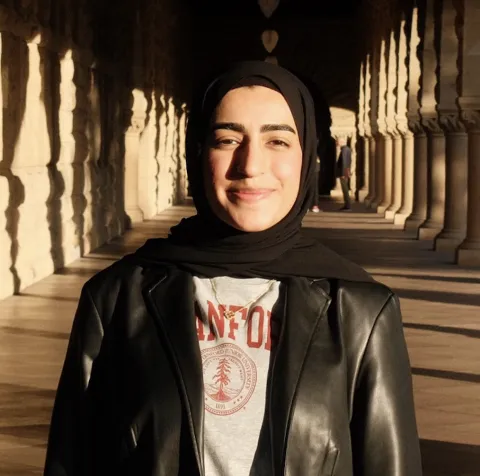
Unlike most students in my cohort who came from a teaching background, I entered the International Education Policy Analysis program from the world of management consulting. My journey to the Stanford Graduate School of Education began not from a classroom, but from the boardrooms of ministries. In the two years leading up to me joining the program, I was working on strategic education reforms across the Gulf Cooperation Council. I worked on nationwide initiatives, including building the regulatory framework of Saudi Arabia’s new Education Visa program, and defining an international student journey that aligns with the Kingdom’s Vision 2030.
While this real-world experience gave me an insider’s view into education policy and strategy in the Gulf, it also sparked my curiosity about research-driven policymaking. In a region where education policies are often imported and borrowed, I began to wonder what it would take for us to become producers (and even exporters) of evidence-based, contextually grounded education policy. This question ultimately led me to Stanford.
My own life trajectory has been strongly shaped by education, both as a source of social mobility and as a space of self-discovery. Experiencing this transformation myself, I’ve long been curious about studying how different education opportunities can shape people’s long-term outcomes and life satisfaction. The IEPA program offered me exactly that space to delve into my curiosity. At Stanford, I immersed myself in coursework that challenged the way I think about education, economics, politics, and the state. Being part of the GSE meant being part of a community committed to understanding and addressing some of the world’s hardest educational challenges. Through debates with renowned professors who have shaped entire fields of study, and classroom discussions with peers from around the world, I learned to examine education systems not only through policy frameworks but through the lived realities of those they serve. The program challenged me to think dialectically and critically, equipping me with the analytical tools to bridge practice and research.
The master’s thesis was an integral part of the IEPA program. For my year-long research topic, I chose to study the Crown Prince International Scholarship Program, which is a Bahraini initiative that funds high-achieving students to pursue university studies abroad. My qualitative research explored how international scholarship programs shape the human, social, and cultural capital of their recipients and how these outcomes compare to non-recipient peers. Analyzing the data through systematic coding and thematic analysis deepened my qualitative research skills and allowed me to connect broader theories to a case I deeply cared about.
Beyond my coursework and thesis, I broadened my policy toolkit through a two-month assignment with UNESCO, where I contributed to a quantitative analysis linking global tax revenues and government education expenditures. I also engaged actively in the broader GSE community, serving on the social committee and helping plan and lead events that brought the cohort together.
As I leave the IEPA program, I carry with me far more than knowledge; I carry a clearer perspective and a renewed sense of purpose. Stanford has reaffirmed my belief in the power of education to transform lives. Moving forward, I feel confident that I am equipped with the knowledge, networks, and conviction to help make that transformation possible. I plan to continue working at the intersection of education, policy, and development in the Gulf, designing contextually grounded initiatives that enable students to thrive and contribute meaningfully to society.

© Stanford University, Stanford, California 94305 .